-
- Written By Jacob J. Johler when attending Burgard Vocational School in Buffalo, New York
-
- The date on the document is May 6, 1939. On that same date in 1942, Corregidor would fall to the Japanese and Jacob’s “camp experiences would be significantly different.
-
- Jacob received a B+ for this assignment. He was 17 when he completed this.
-
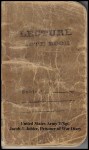
- Cover of the diary kept by Jacob J. Johler while in prison camp.
-
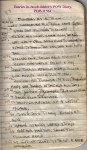
- United States Army T/ Sgt. Jacob J. Johler diary entries.
-
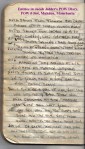
- Chronology of events while in captivity.
Jacob J. Johler Group 205
English III A Period A
May 6, 1939
In writing this book, I wish to point out to the reader what beauty lies in our Allegheny mountains [sic] and hope to make clear to him the things he may miss if he ever has the opportunity to visit this place. I’ve been in the Allegheny Mountains for one month and it is my firm belief that there is no other place more beautiful than its pine forests. Seeing these things, I will endeavor to give to the reader a clear understanding of the forest which will help him to appreciate the wooded lands and hills more than ever before. I will also try to point out the fact that the wildlife in these mountains are not what people believe them to be, but are as tame as a pet dog if handled properly. I therefore believe the reader will benefit greatly by reading the book because it will help him to better understand nature’s beauty, together with the wild creatures of the forest.
Chapter 1 [sic]
The Beauty of the Mountains
It was a warm July day when I was taken by automobile to Camp Bee Tu Vie in the Allegheny Mountains. After passing through the gates of the park there was nothing before us but a road, which was cut through nature’s seemingly endless forest. As far as the eye could see was the deep rich green color of the pines, blended with the white bark of an occasional birch tree. This, combined with the cool air of the mountains seemed to do something to me. It made me feel as though I were at home in this thick wilderness. I was thoroughly convinced that this was the place I’ve always wanted to visit. After penetrating many miles into the thickly wooded slopes, the scenery became more beautiful than ever, against the clear blue sky. Here and there was seen an occasional white cloud which looked like a cotton ball floating in the breezes of the neighboring hills. The further one went in, the more inviting the trees and flowers became. Here I was to stay for one month; what a pleasant place it was. Everywhere were seen the small inhabitants of the wilds cheerfully enjoying natures gifts to them. As I rode closer to the camp, I thought how fortunate I was to have the privilege of working in such a place, which was too beautiful for words.
The Camp
Upon entering the camp, we were heartily greeted by the attendants of the camp and were given a delicious dinner which we craved for at the time. I was then told I could do as I pleased for the remainder of the weekend before starting work. Making a few acquaintances, I was shown all the interesting points of the camp, which were surrounded by the tall pines of that district. Everywhere you looked, there were trees, shrubs and flowers, all beautifully clothed by nature. They all seemed to say “welcome” in their own little way.
After gazing a few moments in the distance, we finally proceeded to feast my eyes on the swimming pool, tennis courts and baseball field. These three events of recreation were all in order and placed at everyone’s convenience. After seeing all that was to be seen in the camp, I was shown to my cabin. It was then about five-thirty.
Night is about eight-thirty in the mountains due to the fact that the sun goes down behind the hills in the distance. After wandering about until about ten o’clock, I went to bed hoping for a good nights [sic] sleep.
First Night
My first night in the camp was very exciting. Although the temperature was ninety during the day, it dropped considerably by ten P.M. that evening. At ten-thirty, it became so cool; I looked at the thermometer, which read thirty-two degrees. When all seemed to be quiet in camp, I heard a gnawing sound under my cabin. I got up and looked under with a flashlight and found to my surprise a porcupine chewing his supper out of the floor of my cabin. Chasing the creature away, I began to wonder if it were me or the camp. Ten minutes later there was a loud rumble of cans followed by a loud cry which sounded to me like a band of cats out on a jamboree for the night. Then came the hoot of the neighboring owl, which blended with the singing of the crickets and grunt of toads. Soon, the whole woods rang with the sounds of the night prowling creatures. After a few minutes of this, I fell into a deep sleep and didn’t awaken again until morning.
Morning
About seven A.M. the next morning I awoke to watch the sunrise. At first there appeared a faint glow in the east, which was rapidly followed by a reddish [Sic] orange color as though someone were raising a giant fan. Slowly the fan seemed to fade in the outer world and there appeared a glimps [Sic] of what looked to me to be part of an orange. It then only took a few moments for it to rise high in the heaven and shed its light upon the whole valley below. The warm light seemed to awaken everything it touched, even the birds began to sing to let you know morn was here. I have seen many sunrises but none were half as beautiful as this. As I stood there and watched, it continued in its upward trend.. I wondered, what is this thing they call the sun; and asked myself where did it come from to shed its light and warm rays upon the people of the earth? It was truly a magnificent sight to behold and I shall never forget it as long as I live.
Chapter 2
Animals of the Park
March 3, 1939
The Deer [sic]
After spending my weekend enjoying the camp as best I could, I arose bright and early to start work. Rubbing my eyes, I gazed out of my cabin door and looked down the trail leading into the camp. Lo and behold there stood four deer as beautiful as a picture as one could cast his eyes on. Proudly they trotted down the trail unafraid of the life in camp. It was truly an impressing moment to see the supposedly wild deer with head high gallop away after being frightened away by the children. The deer is said to be the fastest in the forest and only on rare occasions does a dog ever catch up with them. Together with being a fast pacer he is undoubtedly one of the cleverest of all game in this wilderness. His keen ears and eyes together with his sense of smell do much to keep him in existence. Many a clever hunter has gone without his buck because of the three senses the deer has been blest with. Although hunting these animals in the park is prohibited, they will eventually be taken by some fortunate hunter because the deer has a tendency to wander. Doing this, he may wander in a county where hunting the deer is legal and meet his doom
The Raccoon
After a hard days [sic] work in the camp kitchen I sat around the fire, again thinking what a wonderful opportunity it was for me to be at Camp Bee Tu Vee. My rest was a brief one because I soon heard a loud yow which was my cue to find the trouble. Taking a flashlight I looked around outside and found to my surprise four coon [sic] had fallen into a wooden barrel and these seemingly tame creatures just look up with their shiny eyes, glassy eyes. I wanted to pick one up but found every time I put my hand in the barrel they would open their mouths and show their sharp teeth. Not wanting to get bitten, I tipped the barrel and released the animals from captivity. I then returned to the mess hall beside my place at the fire.
The Other Animals of the Camp [sic]
Beside the deer and raccoon, the black grizzly bear also makes this vast domain his home. He wanders from camp to camp, seeking food to satisfy his hunger and then leaves until hungry again. This blanket of fur is for the most part tame but can be very dangerous if tormented by the inhabitance of the camp.
If one looks closely, everywhere will be seen the jackrabbit, cottontail rabbit together with birds of many descriptions. They are everlastingly eating and sleeping not worrying about a thing. The rabbits have become very tame because they are protected by the game laws of the county.
The porcupine is one of the most timid inhabitance of the wilds of this part of the country. Only on one occasion have I seen him out in the daytime and that was when he wandered in a cabin and couldn’t get out again. Traveling in search of food, his only protection from the other life of the forest is his coat of bristles. He is comparatively slow in getting around but does much to keep you up nights with his gnawing of the nearby trees. For the most part the animals of Allegheny State Park are comparatively tame due to the fact that hunting is prohibited on its premesis [sic].
Chapter 3
The Pools and Streams
March 9, 1939
The Pool
The morning was brisk, the air was fresh and everything seemed to indicate that I should go for a swim. I slipped into my trunks and ran quickly to the banks of the pool. The wind was still and not a ripple disturbed the water. Half awake, I stepped out upon the diving board and debated on whether or not to get wet. Standing a moment, looking at the inviting pool, I finally dove and what a surprise I received. Hitting the water was like being frozen in a cake of ice. Anyone who swims in this pool paddles his way in haste in order to keep warm. Reaching the bank I inquired why the water was so cold. The instructor told me the water came from the nearby springs and was constantly running in and out. It took about a week before I became accustomed to the temperature of the water. After one gets used to this water, it is said to be very invigorating and does much to improve ones [sic] health.
The Streams
Curling its way in and out beneath the tall trees and dense bushes are the small stream, which adds to the beauty of the hillside. It’s [sic] tiny ripples as it passes over the pebbles fills the air with its strange but soothing music. It wanders in and out around bends like a carefree creature of the forest. Sitting on its banks, one finds peace and contentment as found in no other place in the camp.
Sitting on the banks one day, I watched the small fish poking in every place that they could get their tiny noses. It was very quiet except for the chatter of the squirrel busily hunting his winter food. Overhanging the water, there were giant hemlocks with their draping branches. On each branch there sat a bird, gaily swinging in the breeze as the water trickled beneath them. He too seemed to know the stream was the place of leisure and contentment. Everyone who knew of this place went there to sooth his tired body from the hard play he or her encountered during the day. It was my favorite spot and I went there as often as I could to mingle with the wild.
Chapter 4
Work In Camp [sic]
The Kitchen Duties: [sic]
I’ve told you the beauty of the camp so now I think I’ll tell you of the work I had to do.
Every morning I had to awaken at seven and get the kitchen ready for breakfast. This consisted of setting the tables, preparing the cereal bowls, butter dishes and arranging the plates so as to make serving as quick as possible. Promptly at eight-thirty breakfast was served and here again was a difficult job of dishing out five different cereals to please the patrons. After all the serving wad done, my next job came in line and that was scraping the leavings from the plates when they were through eating. Scraping one hundred and sixty cups, saucers, cereal bowls, butter dishes and dumping the cream containers; my nest job was to wash and dry this mass of kitchenware. After two hours of work at the sink, I commenced to sweep the floors for cleanliness is essential in a camp of this kind.
It was a long and monotonous job, but after the first few weeks, one becomes used to it.
Work in Camp [sic]
Other Jobs: [sic]
Besides doing dishes there were several other jobs, which were always on hand for me to do. One of the most important of these was to see that there was always firewood handy for the cooks for their fire. This consisted of the strenuous job of chopping a cord of wood every week and sometimes more depending upon how much cooking was done.
In addition to this, I had two motors to care for; one was to run a generator for the electric lights of the camp and the other to run a water pump. This meant keeping the gas tanks full and see that the oil level was kept up.
Twice a week, I was scrub boy of the camp. On Tuesdays and Thursdays I had to scrub a mess hall, a kitchen, a beer room, a recreation hall, a pump room and a front porch. This was always a hard and tiresome job because I had to move the furniture in order to get in the corners. Scrubbing the floors was a most necessary job because there was a continuous line of children running in and out the rooms.
After my daily chores were completed, I bartended until all in camp went to bed. I would then lock up and retire for a good nights [sic] sleep.
Chapter 5
April 10th 1939
Cheerful and Helpfulness of Vacationer:[sic]
Cheerfulness was the leading factor that made my stay at this camp pleasant. Everywhere the children were seen working and playing to their hearts content. Whenever they would want something, they came with a smile no one could resist. If I did them a favor, I was more than paid by their willingness to return the compliment.
The last two weeks of my stay at camp were the most enjoyable. There were only nine in camp and this made my daily chores considerably less. Much of my time was then spent with a very cheerful fellow named Bob Collins who was here with his brother. Every morning he would wake up bright and early and help me prepare breakfast, do dishes and sweep up the floors. After we both finished the work together he and I would walk down the Hall Trail and talk of the things in camp and enjoy the short time we had left in this beautiful camp. Although I only knew this fellow for two weeks, I am looking forward to seeing him again in camp as I did last year.
Art and Handy Craft: [sic]
Much of the last two weeks were spent in making things to take home as a remembrance of the camp. This consisted of making billfolds, flower pot holders, cigarette holders, and leather key folders. It took a great deal of patience to make these things and a great deal of skill was acquired in doing it. Many of the smaller children had difficulty at first in this new phase of work but soon became quite artistic in the making of these things.
Many of these children came from homes where they had to do little or no work and they were the ones who benefited the most by handy craft. It taught them to use their hands and most of all the use of tools. Art and handy craft also teaches self-reliance and originality of thought, which is so vital in every day [sic] life. One little fellow showed much originality of thought when he painted the camp mess hall on his flowerpot holder so he would always have camp B.T.V. in his home. He wanted to do something different than the other children and so became one of the outstanding in the art and handicrafts class.
Art and handicrafts is a very pleasant pastime and is a great benefit to people who are unfamiliar with tools.
Chapter 6
April 10, 1939
Summary: [sic]
In order to appreciate this book the reader should try and visit this place and see for himself the things I have mentioned.
Once he has filled his lungs with the pure mountain air, once he has seen the high wooded slopes, I am sure he will stay to see more.
One can not [sic] stress too strongly the beauty of the brooks and streams which are always surrounded by the birds of many descriptions. If only to see the variety of different birds which live in these hills, it would be worthwhile visiting these mountains.
In conclusion, I wish to say once you have visited these mountains you will be uneasy until you return again.


 Johlerpow and Zale et al.
Leave a comment