Aside
If there are any researchers or descendants viewing this, I encourage you to obtain and read the book Corregidor, The End of the Line,” by Eric Morris which was published by Stein and Day.
To be able to truly understand what our spouses, fathers, grandfathers went through, one must have an understanding of the events that took place in the Philippines prior to and after the attack of Pearl Harbor. In addition, it is important to see what was taking place prior to the Fall of Bataan and Corregidor.
In addition, I found it vital to understand the history of both the European and the Pacific theater . This is no small task and this is something that has taken years to do.
When I visit the library, I always search in the” Friends of the Library ” section and seem to find many treasures there that are available for purchase. I found a copy of Morris’s book there. Surprisingly, I did not realize that I had a newer edition of the same publication at home!
Because of financial restrictions I was able to attend only one American Defenders of Bataan and Corregidor Reunion in 2007. Later that Year, I was honored to attend the one and only Mukden Reunion in Kingston, New York. At the convention in Washington DC, I was overjoyed as I met someone who served with my father on Corregidor. In Kingston, New York I met former prisoners of war who had signed my fathers diary. There was a visit to the Roosevelt estate and then to the Purple Heart Museum which was very impressive.
During the formative years of my manuscript (still a work in progress), I have read books about the Holocaust, the internment of Japanese civilians in America and also publications about the detainment of German Prisoners of war in the United States. All are eye openers and must be balanced with beautiful things in between. That is why I believe that God has sent my aviary friends, the flowers, my canine companions and the best for last, my husband, for all his support as I undertake this task. God has gifted me with spiritual eyes to see the beauty in a tiny little flower or a lame duck, a sunrise, a manatee….all sent to encourage and let me know He is right beside me. The prisms in my window that my husband purchased for me…light up the room when I am working on a particularly difficult piece.
My advice to anyone who must search the darkness to find the light , you must take on the project slowly and keep balanced, Today, I will look at beautiful flowers and birds at the Botanical Gardens and perhaps catch a sunset at the beach. I might eat ice cream, take a walk, feed the birds or be nurtured by the anhinga, the woodstork, the cardinal…I do know that God has a gift for me and He never diappoints me.
Before I sign off however, I want to refer back to Eric Morris’ book Corregidor, The End of the Line;
In the days and weeks preceding the Fall of Bataan on April 9, 1942, the Japanese inflicted massive artillery and air assaults. April 3rd was Good Friday, the day in the Christian calendar that Jesus was crucified on the cross. The 41st Division, Sector D, II Corps were stationed in the front lines defending Bataan. This Filipino group had fought well in the first Battle of Bataan. General Homma who had since received major reinforcements as indicated in an earlier post, unleashed an attack that surpassed anything previously endured by the Filipinos and the Americans. As the bombing increased, a forest fire of three miles engulfed the front. By that evening the Japanese were now in the foothills of Bataan and occupied an area 3 miles wide and deep. (Morris pp. 387-388)
Saturday, April 4th was a bright and clear day and the Japanese bombers continued their campaign. The infantry was ready to move forward and take control of the last slopes before Samat. Then, they would advance towards the final peaks, those being southern Bataan. (Morris p. 389)
There was a field hospital on Mount Samat in a grove of trees. It was clearly marked with a Red Cross tent that was Paul Ashton’s operating theatre. Ashton was a Major in the United States Army. Eric Morris lists the following after his name; “Medical officer, 12th Medical Regiment, Philippine Scouts, and later 21st Infantry Division (Philippine Army), Bataan Field Force, and Chief Surgeon, No. 1 Hospital, Bataan Field Force.” (Source: “Cast List” behind the Table of Contents in Corregidor, The End of the Line by Eric Morris.) Japanese dive bombers made direct hits to the hospital. Forty of the two hundred patients were killed and the many others were seriously wounded. In addition, most of the men had malaria. As the physician was operating in the open air jungle, he looked up and saw the Japanese infantry appearing over the ridge line about a mile away.
At least one hundred American soldiers appeared and began to deploy their machine guns. It would turn out that this is what remained of the 31st Infantry. This bought a little time as the Japanese retreated for cover. Sadly, Ashton, the physician was told to pick the worst cases because this group would be unable to hold off the Japanese for very long.
Paul Ashton crammed ten men on stretchers into an ambulance that was meant for four. When he arrived at hospital number one in Cabcaben he reported to the field surgeon. He was given a dozen old buses to evacuate his hospital and a few light tanks.
Upon Ashton’s return, the Americans were barely holding the line. The tanks were a welcome sight and while the staff and the patients were being evacuated, the bombing continued.
Ashton’s group returned just minutes after the Cabcaben hospital suffered its first air raid. It was a “scene of unbelievable carnage and confusion.” (page 391). Those who survived the air raid. were in the process of evacuating the hospital.
(Morris, pp. 390-391).
Meanwhile on Corregidor, General Wainwright was given orders by MacArthur, over 3000 miles away in Australia to mount an attack against the Japanese. Wainwright and staff studied the document and many wondered if MacArthur was out of touch with the reality of the situation. (Morris, page 392).
APRIL 5, 1942, EASTER SUNDAY: The Japanese were a day ahead of schedule. Saturday night was spent reorganizing. At dawn they resumed the air and artillery bombardment which was devastating. Mount Samat was stormed after a devastating fire fight. It was at this time that a second Filipino division was destroyed. (Morris page 392-393).
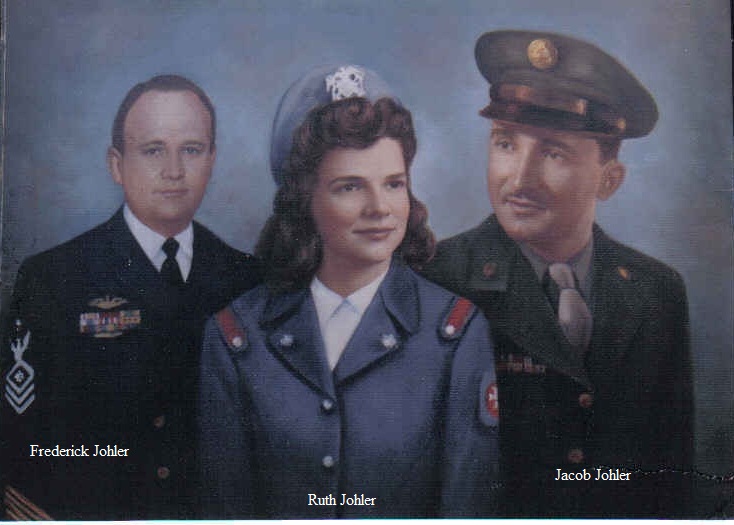


 Johlerpow and Zale et al.
Written
on April 5, 2014