S
As I continue work on this blog, I will crop and post each name and entry separately. I will also begin work on a spreadsheet, listing the names of all who appear in the diary. Stay tuned for correct web addresses of associated sites such as the Mukden POW Remembrance group which has a wonderful website and roster of the individuals that were there. Additionally, there is a Facebook page for the American Defenders of Bataan and Corregidor and there are other sites of interest. This is a work in progress and any historian, expert and novice like myself will tell you, that no list is 100% accurate as new information is always being discovered or documents that were considered “classified” are now being made available.
Good afternoon. Today is 29 October 2014 and as promised I am cropping individual names and entries that are listed in Jake Johler’s Prisoner of war diary. The entire page will appear first followed by each name that will be displayed individually.
Good afternoon. Today is 3 November 2014 and I am adding three more entries from Jake Johler’s diary.
[galleryhttps://youtu.be/ffsYWx_7zTI type=”slideshow” ids=”2053,2054,2055,2056″]
5 November 2014: Below is another page from my dad’s diary. I remember the men on this page by cropping their names individually and giving thanks for their sacrifice. Please note that at times you will see next to an entry that the individual has died. In some instances, it is clear that the person passed while in captivity. In some instances when the word “died” appears. it is possible that the individual returned home after liberation to their respective countries. A great project for a history class would be to take the individual name and see what can be found out about the person. Now that we have internet databases, so much can be learned online.
Today is 6 November 2014 and I am adding a few images of the POW camp from the Johler-Bryan Collection and the Karen Zale Collection.
8 November 2014: Jacob Johler, along with hundreds of other POW’s spent approximately thirty days at sea before arriving to the Mukden prisoner of war camp on
11 November 1942. That day was called “Armistice Day” as it was the remembrance of the end of World War One. Today November 11th is called Veterans Day. Below is the synopsis of the voyage at sea which began in the Philippines.
10 November 2014: Sometimes in the quiet of the night when I awaken and hear the wind swirling outside, I wonder how the men survived such harsh conditions. John Zale shared that a group of three of four men would get together and look out for one another. Jake Johler spoke often of his “buddies” that stayed close when he lost his vision from avitaminosis and could not walk because of severe neuropathy and circulation issues. Often, he shared, they carried him to the latrine. When someone was ill, many would forfeit some of the little food that they were given to provide additional strength. Today, I give you another page of Jake Johler’s diary.
Today is 12 November 2014. The north wind is blowing and we are expecting some snow.
After spending time in a tropical climate the men would now be experiencing winter again with temperatures as cold as 30 and 40 degrees below zero. Many would perish before Christmas. Some would be executed. Others would perish from diseases such as dysentery, malaria and beri-beri. All were severely malnourished and slave labored. This was the sad beginning of their remaining imprisonment until the liberation of the camp in August of 1945.
Today I remember and give thanks to the men listed on this page of the diary.
Good Morning. Today is 14 November 2014. I experienced my first full day of snow yesterday. As I was walking the dogs with my husband I thought about how difficult it would be without a coat and gloves, warm socks and shoes.
This morning the sky was clear and there was a beautiful glow around the moon. The stars twinkled and the air was still. After the dogs were walked and fed, I took another walk and saw a beautiful sunrise. I did not have my gloves with me and my hands were very cold when I entered our home. I cannot even comprehend how difficult it was to survive in such conditions.
The “hell-ships” used to transport the prisoners caused many to perish. In this page of Jacob Johler’s diary, one will observe that a prisoner died on route to Japan from suffocation. Thousands were loaded into the front and rear hold of the Japanese freighters. Some were taken to Japan, others to Mukden, Manchuria.
The “Tottori Maru” was the name of the ship that Jacob Johler was on, arriving at the Dairen docks in Pusan, Korea in November 1942. I believe John Zale was on this ship as well but arriving at a different time.
The man who perished, William Tooley, Cabanatuan #1 camp, apparently met my father Jacob in the Cabanatuan Prisoner of War Camp. There were three camps in Cabanatuan. Jacob Johler eventually ended up in Camp #3 and remained there until his journey began to Mukden.
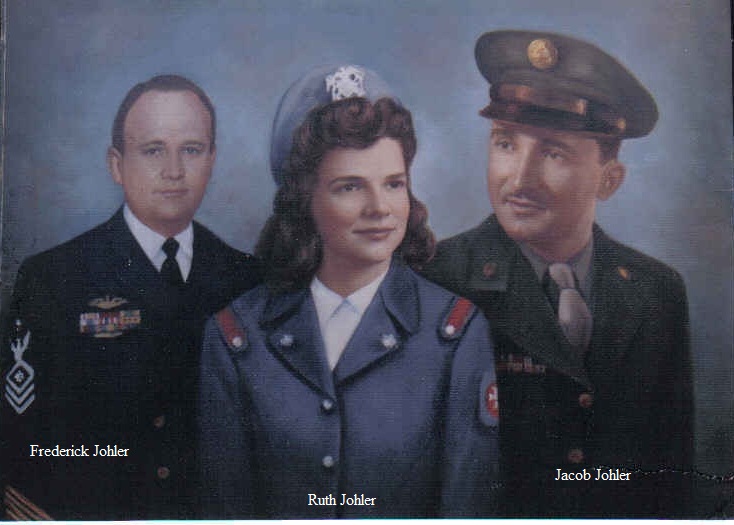
Very briefly, Jacob Johler was on Corregidor from early 1941. On December 2, 1941, he was part of a searchlight Battery. He traveled back and forth from Bataan to Corregidor. He was on Bataan when it was surrendered to the Japanese on April 9, 1942. Under heavy fire, he crossed Manila Bay and was on Battery Way in Corregidor when it was surrendered to the Japanese on May 6, 1942. Jacob and the POW’s were processed through Bilibud Prison and then were sent to the Cabanatuan POW camp in the Philippines. He was approximately thirty days at sea on the “Tottori Maru” and arrived at his destination in Mukden on 11 November 1942. The Mukden POW camp was liberated by Soviet Soldiers in August of 1945.
Today I am adding another page of Jacob Johler’s POW diary. An interesting project for someone might be to research the names on this page and see what their journey was like.
Today I remember William Tooley and wonder what his life would have been like had he survived. I also give thanks for the other individuals listed on the page. I hope someday I will have the time to find out what happened to all the men in his diary.
Today is 16 November 2014. We about to experience our first snowstorm in 19 years. In 1995 we relocated to Florida and to my surprise we have returned to the deep north. As I type this in my warm and cozy dwelling I think about the frostbite and the bitter cold that the men of the Mukden prisoner of war camp experienced. Today in their memory I will also post some images of a late blooming rosebush that survived the first snowfall.
17 November 2014: As I post another page of Jacob Johler’s diary, I discovered that the first entry, Donald Hensey, died of dysentery while in captivity. Contracting this illness even in the best of conditions is debilitating and unpleasant. The symptoms of dysentery include abdominal pain, fever and chills, nausea and vomiting and watery diarrhea that contains blood, mucus and pus. Jake Johler shared that often there was a lack of toilet paper. If they did have this commodity, he said that they were limited to three or four pieces per month which was carefully rationed out by the Japanese guards. The men experienced intractable suffering that followed them throughout their life if they were lucky enough to survive.
Today is 20 November 2014. Buffalo New York is digging out of a severe lake effect snow that affected many towns and counties. The storm has made International News and the region is in a state of emergency. When the snow fell in Mukden, Manchuria which is now called Shenyang, China, often the temperatures were as low as 30 and 40 degrees below zero. There was no state of emergency in Mukden, Manchuria (Manchukuo). The American and Allied Prisoners of War huddled around in a barracks with only one piece of coal in the stove. They were required to march several miles to the factories where they performed hard labor for twelve hours at a time. Warmer clothing was issued but it was not given to the men until the calendar stated it was the start of winter. In the United States, winter officially begins on 21 December. This would mean for the POW’s that they would be working in frigid weather without winter gear which consisted of very uncomfortable wool uniforms. There were no gloves or hats, no scarves or boots. Hot water did not exist. Often, the pipes froze and them men were without running water for several days at a time. All were infested with lice and scabies. Every morning regardless of the temperature, the POW’s were required to be outside for “roll call.” Death was a common occurrence at the camps and often the ground was frozen so the bodies could not be buried until a thaw.
Today as I post another page of my late father’s diary I give thanks for the men that appear on this page. May God bless you and perhaps someday we shall meet in eternity.
Today is 3 December 2014. It is gloomy outside and there is a fine drizzle. The snow has melted at least for now and there is mud everywhere. In the early morning before sunrise, the wind was stronger and the rain heavier. The dry heat from the furnace and lack of humidity has caused my heels and fingers to crack open and bleed. As I entered our warm apartment and removed my wet socks I reflected on what it must have like to walk several miles in the rain with either uncomfortable shoes or none at all. I wondered if I would have had the strength to stand in the rain without complaint for roll call before departure to the factories or mills for 12 hours of slave labor. Today as I post another page of Jacob Johler’s diary, I give honor to these men and thank them for their service.


 Johlerpow and Zale et al.
Leave a comment