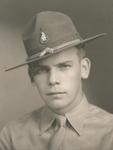
John Zale, United States Army, POW # 433.
John Zale was interviewed in 2007 on videotape for over 2 hours at a military base in Niagara Falls, 62 years after being liberated. As a WWII Veteran and a POW for 3 ½ years this is what his experience was as he told it:
Dad just turned 18 years old on Feb. 9, 1940, and on February 14, 1940 on Valentines Day, he enlisted in the Army and was sworn in. Was a Staff Sergeant when he got discharged. As a Private he made $21 a month and he sent $5 of that home to his mother. When dad told the recruiting officer he wanted to go as far away as possible the officer told dad that would be the Philippines. But he warned, and dad quoted him, “Son, you don’t want to go there. It is sitting on a keg of dynamite and the fuse is getting shorter.” This was before the U.S. was formally involved in the war. So, dad said they already knew it was coming. After boot camp at Fort Slocum, he was shipped to California, then Panama, and he started his tour of duty in the Philippines on November 3, 1941.
While stationed with the 31st Infantry (also known as the American Foreign Legion) in the Philippines, he volunteered to go out to the ammunition ship to get supplies and load it on a barge and a typhoon hit that he had to ride out. With waves over 30 feet high, the men tied themselves down to the ship so they wouldn’t be swept overboard.
So Dad was already in the Philippines prior to December 7, 1941, when Pearl Harbor was being bombed by the Japanese. Dad was also being bombed simultaneously in the Philippines the same time Pearl Harbor was being bombed. They hit the air base and knocked out the planes. Dad had his formal orders to go home to the States from the Philippines, but that ship never arrived. This is when the U.S. formally entered WWII.
Dad was a Corporal and had a squad. This was during the Battles of Bataan and Corregidor before the surrender to the Japanese. On January 21, 1942, on the way to Abucay he got hit and was wounded in the gut. When the U.S. troops withdrew, they left him behind, wounded. But a soldier came back and carried dad out. It turned out to be Abbie Abraham. The Philippines were jungle-like conditions and he was operated on in a school house and he recalls that his intestines were outside of his body. It was very primitive. The word got out that the school house was going to be bombed. So they carried dad and the other wounded soldiers out and just had their cots on the ground with mosquito netting and then the school got bombed. They weren’t even in any kind of building for a hospital. He was operated on and another guy gave dad a direct blood transfusion. There was no medication. He was given his last rites since they thought he was going to die.
The guys had malaria and pellagra. Dad also had dengue fever (both “dry” and “wet”) that he was treated for with sulfanilamide and this was before the Death March. He was told by his company commander that if he could get back to the squad he will get a “third stripe.” Dad could have gone home to the U.S. but he wanted that third stripe. On March 3, 1942 he returned to duty as a platoon leader, but was still too weak to carry his rifle.
When MacArthur was in the Philippines dad was there at that time. Dad was on guard duty for MacArthur. When dad would salute, the General never returned the salute. They called MacArthur “Dug-out Doug” because he got out through the Malinta Tunnel to escape and was flown to Australia. This is when he vowed as he was leaving, “I will return.” The fall of Bataan came on April 9, 1942 when they surrendered to the Japanese.
Dad never saw General Wainwright because the General ended up on Corregidor in that prison camp. Wainwright surrendered Corregidor to the Japanese on May 6, 1942. In the Philippines the women were treated badly. He said the nurses were like saints to him. Some of the nurses stayed behind.
As far as meals, in the Philippines it consisted of “lugaw” (a rice porridge popular in the Islands) which was watery rice the size of a tennis ball. Food was so scarce the men were shooting monkies and calvary horses.
Conditions were already so bad before the Death March because the soldiers already had malnutrition. Since dad was wounded he gave his rations to his squad, the ration was a can of salmon and a can of tomatoes on the day he was wounded. If a soldier didn’t have a fever he had to go to work. If you were sick, they cut your food rations in half. The food had maggots in it. The soldiers had been abandoned and would chant the saying, “No momma, no papa, no Uncle Sam.” They were the Battling Bastards of Bataan.
On April 9, 1942, came the Bataan Death March, one of the worst atrocities in modern wartime history. There were an estimated 72,000 prisoners, both Americans and Filipinos. Most of them were already very sick, were delirious, had blistered mouths and lots of guys died. Dad had malaria and was very weak from having been wounded in action. It was hot in the tropics, 120 degree heat, and they had no water and no food through the March. During the March some of the Filipinos would throw food to the soldiers. If they were caught helping the prisoners, they were bayonetted. Some of the men were able to get the banana peels that the Japs discarded in the dirt. If you fell down, that was the end for the soldier. They were shot if they couldn’t keep up. Dad was hit in the head so hard with a rifle butt that it knocked his helmet off and he believes he sustained a concussion. The soldiers had dysentery and marched in their own defecation. They killed the POWs like dogs and bayoneted them to death, in addition to the guys dying of scurvy and malaria. Thousands of men died during the March. The estimated 65 – 70 mile March lasted something like four days and five nights of marching, then were shipped in boxcars by rail, ending at Camp O’Donnell. He barely made it. When the March was over dad said he wouldn’t have made it another mile. Somebody in the line said, “We’re almost there.” In Cabanatuan dad ended up in a make-shift “hospital” and was in what they called the “Zero Ward” and very few made it out of there. Most of the guys died who were in the “Zero Ward.” After that was the “Saint Peter’s Ward” (also considered as the morgue). Only one guy made it out of the “Saint Peter’s Ward.” When he was in the “Zero Ward” he was in a coma for three days and a soldier spoon-fed dad. He never knew who that was.
He was at Cabanatuan Prison Camp around October 10, 1942 and then Bilibid Prison. In Cabanatuan they slept on lice infested bamboo straw bunks. In Bilibid Prison he was severely beaten because he did not bow to one of the Jap guards. In Bilibid they slept on a concrete floor. From the Philippines he went to Korea and then finally to Mukden, Manchuria (China). ( Mukden is now known today as Shenyang, China.)
What was even worse then the Bataan Death March was the trip in the “Hell Ships.” The POWs were packed into the hold of the ships and dad was on the “Tortori Maru.” There was no place to lay down in the hold and you either squatted or stood for 30 days. Men were packed in tighter than sardines and you just waited for someone to die to make more room. He said that they were packed like sardines in a can but the sardines had it better because the sardines were dead and the POWs were alive. They were infested with lice, covered from head to toe, they had dysentery and crapped where they stood. There was no air and it was stifling and the smell was overwhelming and they were suffocating. A bucket was sent down for your urine and excrement but it didn’t work and it was a mess. Plenty died. They were jammed in the hold, maybe 1400 men in a hold meant for 200. The American submarines torpedoed the ships and saw they were enemy ships but didn’t know that POWs were in the hold. He said he heard the torpedoes going past them. Some of the “Hell Ships” got hit and men died, but they missed dad’s ship. Dad said maybe it would have been a good thing to have been torpedoed rather than go through this horrific nightmare. The ship stopped in Formosa to load up on fuel and the men were unloaded, stripped naked and were hosed down with a fire hose to get the lice off of them. The women were on the loading docks carrying baskets of coal and it was humiliating for the men. Dad said they were so infested with lice that it was the lice that kept the ship afloat. Then they were put back on the ship to Pusan (now called Busan), Korea, arriving in Korea around November 11, 1942. Again the men just talked about food and there was no talk about women. Just food.
Next they were taken off the ship and put on a freight train that took them from Korea to Manchuria (Mukden) in China. He recalls getting some decent food at that railroad station, which was a boxed lunch of rice and some pickled salty crap.
In Japanese-held Manchuria, there was Camp 1 and Camp 2 in Mukden and satellite camps and coal mines. He worked in the tool and die factory, the textile factory, and also did farming, coal, and the railroad. At some point he worked on the Great Wall of China, chipping off mortar from stones.
Dad stole medication for one of his guys. Dad knew there was medication in the dumps, and equipment was laying everywhere, and he had picked up a Filipino’s first aide kit and he used the medicine for bartering. He actually sneaked out of the Camp to go get the first aid bag and then sneaked back into Camp. (Risking his own life in order to try to save a fellow prisoner.) He gave some medicine to a fellow prisoner, but that man died regardless. The POWs were to turn over any medications to the officers, but they didn’t and used it for themselves. He said they didn’t trust the officers.
Everything you ate in Mukden was soup. The soup would come in wooden buckets and you were given one dipper of soup. In the fall there were more vegetables, such as rotten potatoes. Once a year on the Emperor’s birthday they were given an orange to eat. There never was any meat. Fights would start over the food. They talked about food and recipes. The Camp had barbed wire around it and the dogs could get in. The men ate dogs and other vermin that they would catch. Dad dragged a dog and beat him to death and he ate the dog. The guys who refused to eat the dogs died. A guy who was next to dad told dad he wouldn’t eat the dog meat and the very next day that guy died. Guys lost the will to live and were dying like flies. Men were dying fast in Camp, maybe 100 per day, both Filipino’s and Americans. The POWs figured that at the rate the men were dying they had only about 20 to 30 days to live. In Mukden in the winter the ground was frozen so they just stacked up the bodies.
Dad would always be plotting on where he could hide out if something would happen, but he knew it would never work out. He was always plotting on how to just survive. They were reduced to being treated like animals. You were at the mercy of getting executed if you tried to escape. He thought about hiding out in a manhole. In the barracks they slept on a deck off the floor and once he took a loose nail from the floor and moved the board and he thought he could crawl in there and lay in there if he needed to hide. They slept in lice. Their past-time was killing lice and had a saying, “Who die, you or the fly.”
He was always plotting how he could sabotage something, break something or steal something without getting caught. He did sabotage against the Japs, as the POWs would stage their own private war against their captors. While working at the textile factory, when the guard wasn’t looking he would loosen up the weave of the fabric (sort of like a canvas), which would weaken the fabric. Once he flung a piece of metal up into the electric wires and knocked the power out. A group of guys were working on making cement, and when the Japs weren’t looking they took a lathe a buried it in the fresh cement. The Japs never found the lathe and dad said the China men were blamed for the missing lathe.
The prisoners would be standing in lines. A captain would charge down the middle of the lines of men with a saber to straighten out the lines. You would get stabbed if you weren’t in line. You had to learn to count in Japanese in a few days and had to learn some Japanese to follow their orders. Dad got hit in the mouth by the Jap’s shoe for not counting correctly in Japanese. Dad’s POW number was 433.
Dad said that three or four of the POWs formed a group that he was a part of and they would look out for each other. Dad talked some of the guys out of trying to escape. The men always talked about food. He got caught red-handed with a handful of brown sugar and he got beat for it. He said it was worth risking the beating just to get some sugar. Since the Japs were short in height, they would stand on a box when they beat the POWs so they could reach them.
Dad and some of the other guys got court-martialed in the prison camp over stealing alcohol. There was a difference between alcohol and sake, and alcohol was more for medicinal use. So dad claimed it was sake that he stole, which would give him a lesser penalty than for stealing alcohol, and for four days they beat the hell out of him and got 16 days of solitary and stood at attention for 16 days. There were times dad spent two weeks in solitary confinement, which meant being locked into a small box about four feet square. He kept his sanity by watching a spider build its web and killing maggots.
At Mukden, he was in Camp One, and after the first winter guys were dying of pneumonia and dysentery. They had intestinal worms and fungal infections. He worked at a tool and die factory, which the guys thought may have been a former Ford plant from documents they found, and then was moved to the Camp Two. At some point dad said the American planes bombed the camp and some guys were killed. He said they were like “silver jewels” flying over them and it was a good sign to see the American planes because they didn’t know what was going on in the war. The camp commander told the POWs to write a telegram to President Roosevelt that they were being bombed by U.S. planes. One of the guys had a missing arm and he said, “Send the planes back. I have one more arm.”
When dad was working at the textile factory one guy couldn’t take being a POW any longer and he put his arm into the gears of the textile mill. Dad got beat with a rifle by a Jap guard for trying to stop the power to the main switch in order to help the man get out of the gears.
In winter they would march five miles to work. They got one bowl of what seemed like cornmeal and potato soup. It would go right through you and you would crap right in your pants and you had to keep on marching to work. One time a guard shoved dad’s face in feces. They had a tub that they cooked the dogs in and would trade the dog skin with the China men for cigarettes. A POW by the name of Jack Williams knew how to cut up the dog meat and find the filet portion. They would put the dog meat in with the pot of soup. Also sparrows were used to supplement the food.
They were in primitive Chinese turn-of-the-century barracks, low buildings, that were half-buried under the ground. Water froze in their canteens. There was no heat in the barracks, but some heat was rationed. You had a bucket of coal and a bundle of kindling and the fire lasted maybe one or two hours. It was 30 below to 40 below zero in Mukden and it was hard to breathe in the cold weather. They were given old coats that had bullet holes in them and footwear. At first before it became cold, they only had open “wooden clogs” for their feet. When the weather got more severe they were given blankets. But by a certain date, regardless if it was still cold out, they had to turn in the blankets and coats. They were always getting called out for roll call regardless of how cold it was. Once they had the POWs strip naked and threw cold water on them, making them stand at attention in the freezing weather.
At night dad’s feet would hurt from having beriberi and he would hang his feet off the end of his bed. The Japs would hit his feet with a rifle because they were hanging over the edge. He said the Japs were even mean to their fellow Japs. The Jap captain was getting punished by the Jap colonel for something he did and he had to carry a cement bag over his head. The POWs knew it would trickle down the Jap ranks to them and they would get punished too.
The Japs had the POWs in groups of 10. If one escaped all the other nine would be killed. Dad had wondered if one was going to try to escape when the guy asked dad to trade bags with him. Dad had a Filipino first aide bag, which was small. The other guy had a larger musette bag. It turned out that a group of three tried to escape. The rest of dad’s group was punished and dad had to sit at attention with their legs crossed for 14 days until the other three were eventually found. You were only allowed to get up to go to the bathroom, which you didn’t do very often. The three guys (one was a Marine) were caught and brought back to the camp. It was obvious they were beaten into almost oblivion, semi-conscious, and were paraded around as they wore a steel ball and chain. They were then executed. Later, there was a stake in the ground where the three were buried on “Boot Hill,” with not even a cross to mark the grave. No one ever tried to escape after that.
The Japs did human experimentation on dad and the other men. They found out later it was called Unit 731. It was rumored that the Jap doctors were coming in from Japan to see if the POWs were okay for “breeding.” The doctors measured literally everything on the guys. They were given unknown stuff to drink as experiments. Different guys had different reactions. The Chinese suffered the most from these human experiments. Besides drinking unknown fluids, dad recalled them taking a feather that contained some virus and tickling it on his nose. The doctor that did these human guinea pig experiments was never charged for his atrocities after the war in lieu of his turning over his test results to our government.
During the time he was a POW he only got one card from home through the Red Cross and it was limited to 25 words. Receiving that one card from home was, “Like lighting one candle in a dark room.” He could put no monetary value on that one card an what it meant to him to receive it. When dad was gone from home when the war started, it was one whole year later that his parents were notified that their son was alive and was taken prisoner. He said it was harder on the mothers back home because at least the men knew they were alive but the mothers didn’t know if their sons were still alive. Near the end, some of the men got packages through the Red Cross. Dad only received one package from home, which he said had already been “burglarized” and it only contained a bag of peanuts and a bottle of vitamin pills by the time he go it. The Japs kept the mail and packages in a warehouse and never gave it to the POWs.
In early August 1945 the atomic bombs were dropped on Hiroshima and Nagasaki. On August 15, 1945 the Japanese surrendered.
They were liberated by the Russians and it was a great day! First a team parachuted into the camp at 11:00 am on August 15, 1945, before the Russians came to keep the Jap commander from executing the POWs because the war was now over. One team member was an interpreter. The Japs were already burning their records. The Jap commander only knew that he had orders to execute the men and the team that parachuted in had to inform him it was over. When the Russians arrived, they lined up all the Japs and their machine guns and equipment in front of the American POWs. This was at the very same Camp where the American’s were the POWs and now the Japs were the POWs. After the Americans were liberated they in turn had to guard the Japs, since they were now the prisoners. At the gate to the Camp, dad was on duty and a company of Japs wanted to come into the Camp for protection because they were being attacked on the outside. The Jap company commander surrendered his saber to dad, dad took the saber, but then told the Japs to keep going and he closed the gate. We still have that same saber. When the American POWs were guarding the Japs now they had orders that they could not touch them or retaliate. Dad reminded one of the Japs that they were to commit hair-kari rather than be taken prisoner. So dad offered him a knife, but the Jap refused to kill himself.
It was between weeks to months before they could leave the Camp because the railroads needed to be repaired. After they did leave and were in town in China, dad and his fellow POWs and some Russian soldiers held up a bank and loaded up with the money and then hit a brewery and got beer. Then came the women. Cigarettes and coffee is what they wanted. They would give the money away to the China men.
The now free POWs were then put on a hospital ship, the “USS Relief,” (1945) to be taken from Manchuria to Korea, in order to get back to Okinawa (arriving on September 15), and again as bad luck would have it, a typhoon hit that he had to ride out. The force of the typhoons were so fierce that the upper structure of the ship was all bent to hell. In Okinawa dad wrote “Kilroy was here” on a “shit house wall” to leave his mark. When they were flying from Okinawa to the Philippines and another storm hit, the plane before dad’s crashed and they had to wait for the debris to be removed off the runways before they could land. Dad weighed 89 pounds and was emaciated when he got liberated. He said they never could have lived through another winter, after 3 ½ years as prisoners of war.
From Okinawa he was transported to Letterman Army General Hospital in California and then to Rhodes General Hospital. He was honorably discharged from the Army in Georgia and he didn’t want to go home right away because he couldn’t face it. When he got home, his mother passed out when she saw that he was alive. It was the inspiration of seeing his mother that kept him going all those years as a POW, and also one of his school teachers. Later, he became interested in the Boy Scouts and was a Scout leader of Troop 192 for 15 years. His mission was to teach the boys about survival and patriotism. To the present he is always preparing for survival.
(transcribed by Karen Zale, the daughter of John Zale)


 Johlerpow and Zale et al.
Leave a comment