Burgard Vocational School, Buffalo, New York
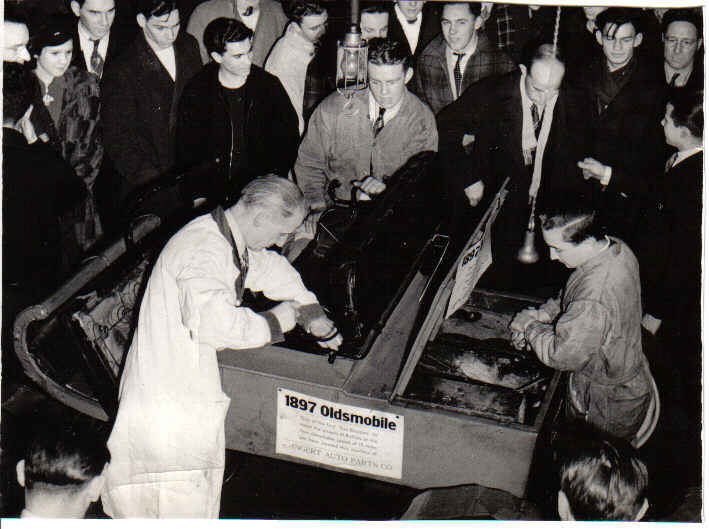
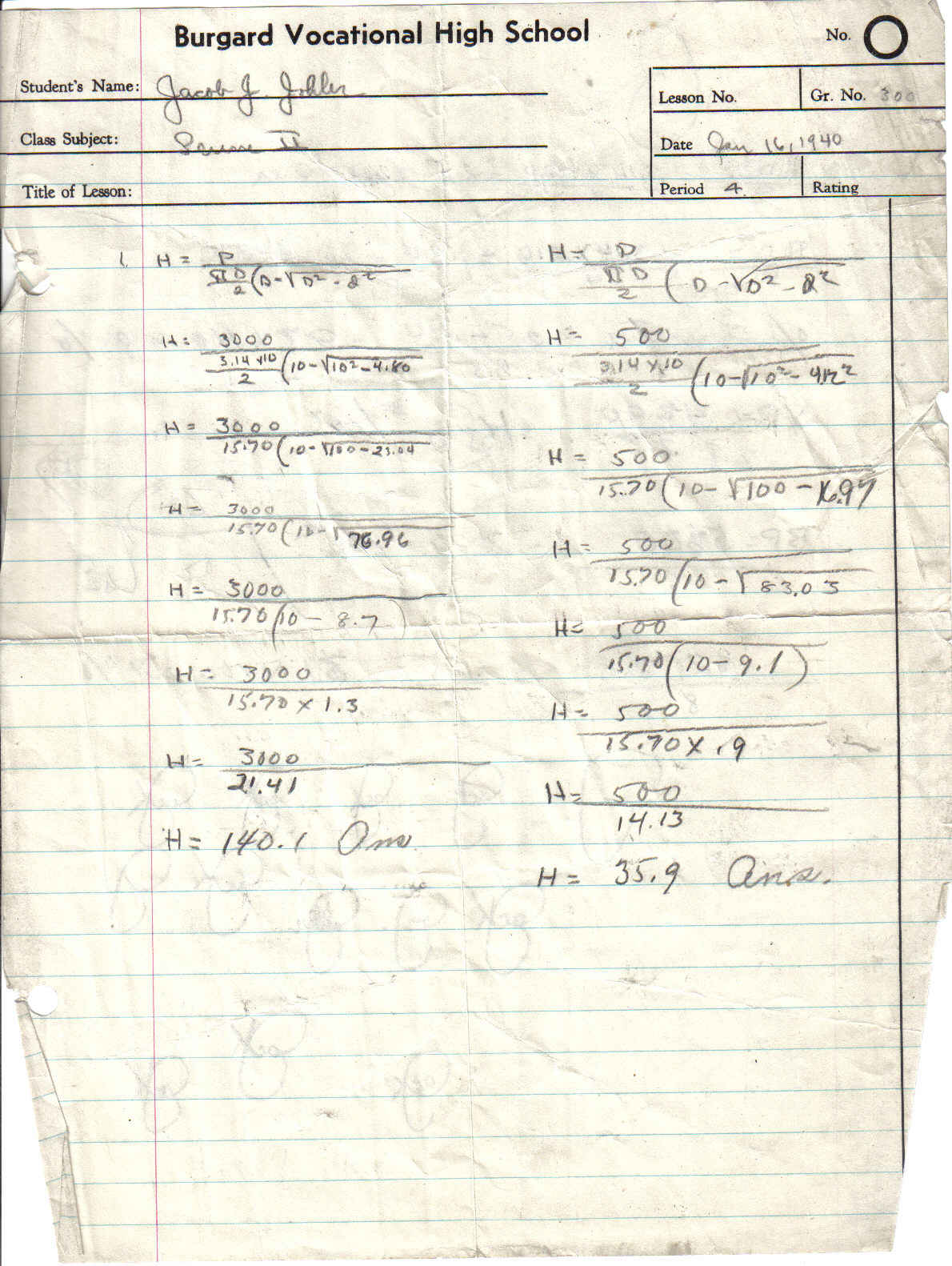
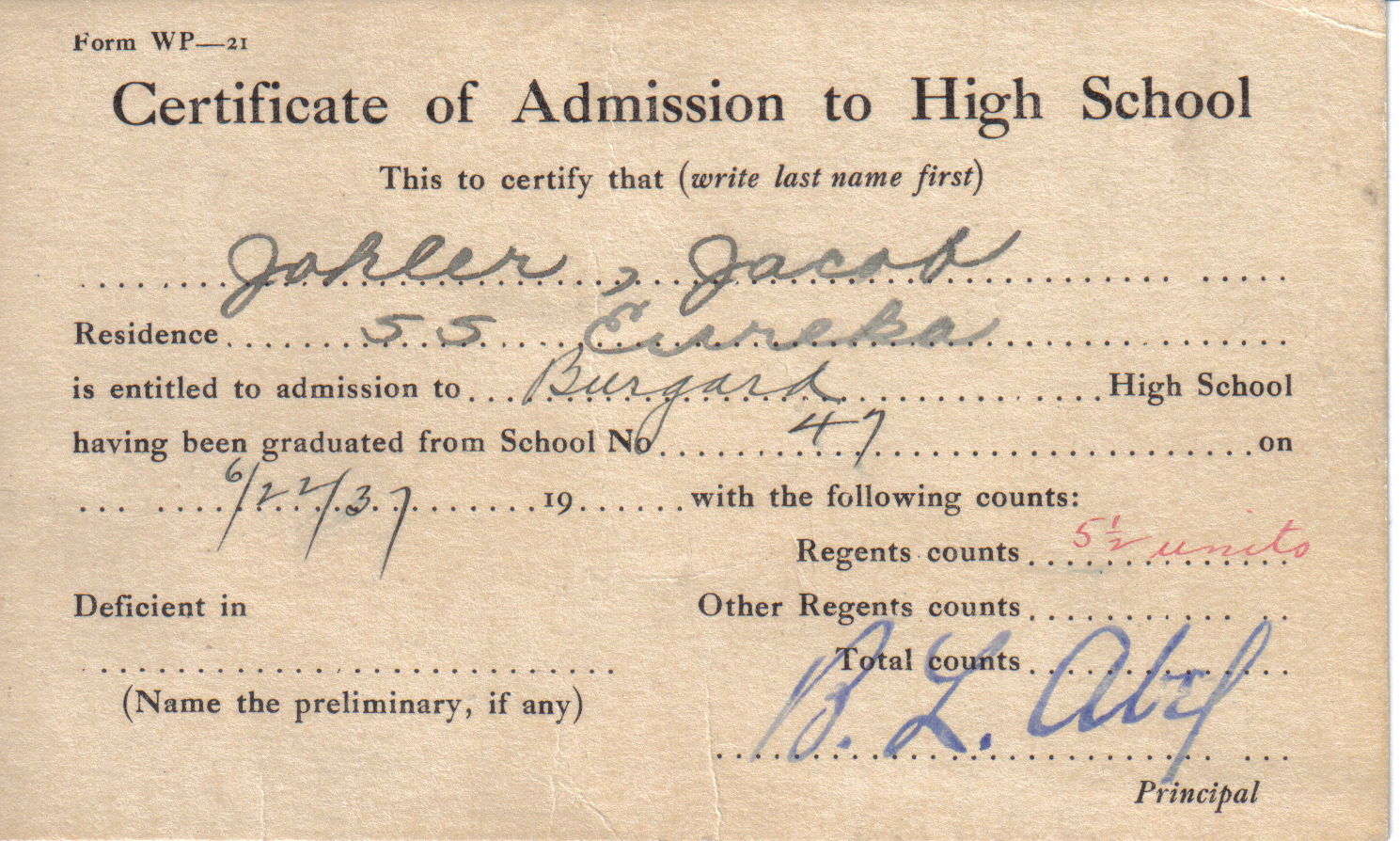
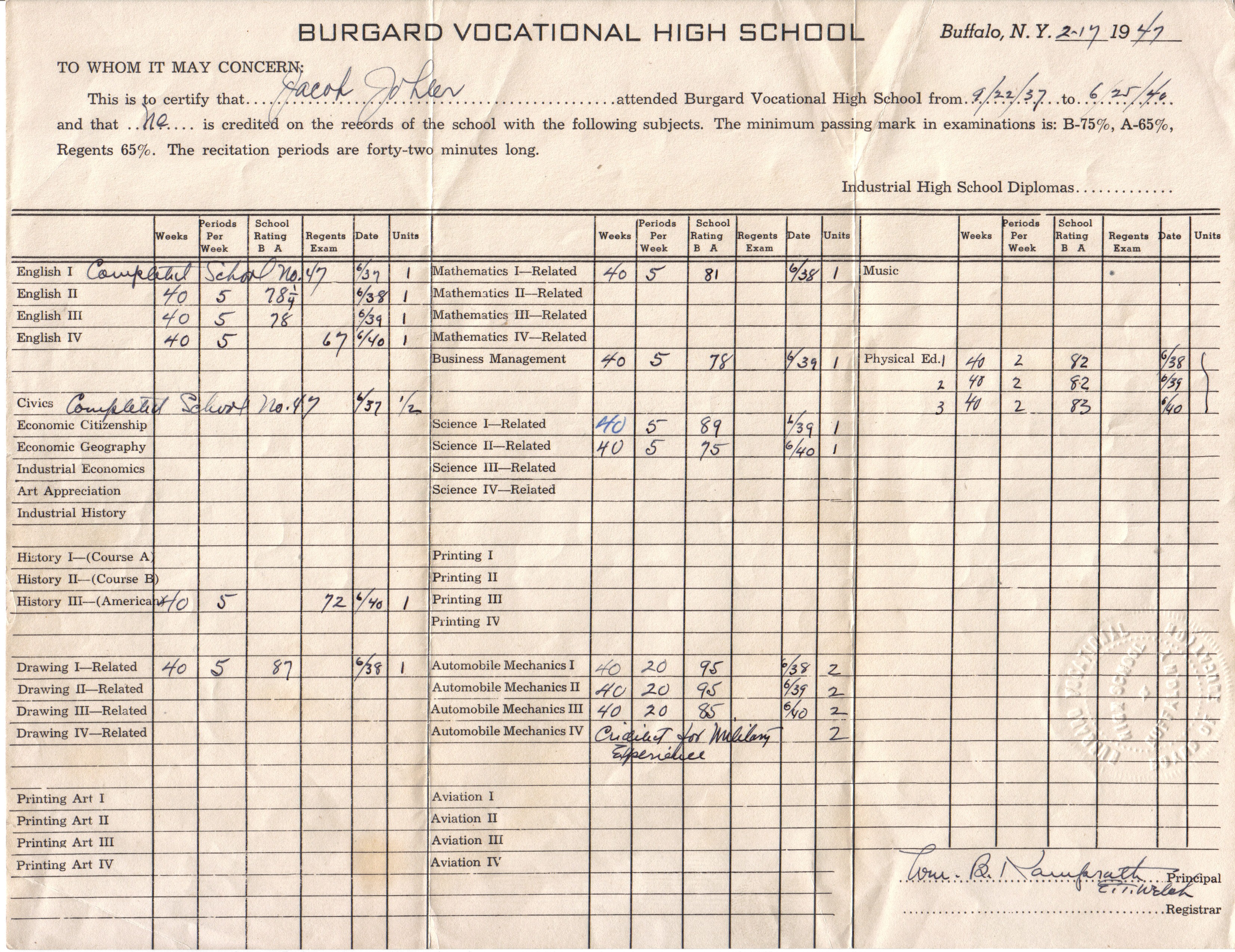
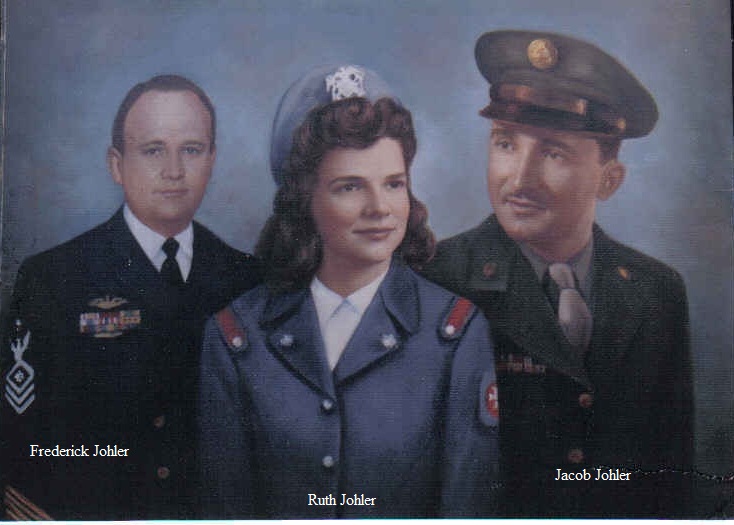

To all our military, past and present.
Thank you and God Bless you!
Dorothy Johler wrote on April 10, 2014:
“A cool breeze brushed against my face as I took my daily walk around the complex.
There is always something in bloom and the weather is especially nice on the Spring. The birds of the air wait for me. As I stroll around the complex and look upward, many fly overhead. Others are perched in the treetops; chirping, singing and fluttering their wings.
As I open the gate to the tennis court…my weariness departs and my spirit is awakened by a scent that I recognize.
On the outside perimeter of the fence, in the corner, is a towering tree that is trying hard to survive. Beside it, was the source of my delight, another beautiful tree with little white aromatic buds that awaken my senses. I smile and no longer feel alone. Standing in the silence, for just a moment, I feel peaceful. As I watched a pair of cardinals fly overhead, I listened to the piercing cries of seagulls as they scavenged overhead for food. As I strolled around the tennis court, trying to awaken my muscles, the fragrance covered me like a soft fleecy blanket.
In the next moment, my spirit seemed to transcend time and I was a child again, strolling through the wooded areas behind our house. There are trees like this everywhere and after a long and icy cold winter, as the buds burst open, the air was filled with that same fragrance. After I lingered for several moments, my spirit leaps again through time to a beautiful Victorian town in Central, Florida. As I traverse the town I notice there are many flowers in bloom. To my hearts delight, this beautiful aromatic tree resides here as well. As I turn the corner the magnificent aroma from the ivory white flowers appear and make my spirit dance. I grasp a branch and pull it close to my face so I can smell the beautiful fragrance. I close my eyes and feel deeply connected to Kiros time where there are no clocks and no schedules to keep.
As the sun rises, a loud siren pierces the silence; almost competing with the planes as they depart the local airport . Just outside the gate, I see cars rushing by and I see a traffic helicopter overhead.
As I return home from my walk, I pour a freshly brewed cup of coffee and still feel the peace of that moment.
The fragrance is still alive and it asks to be remembered before the petals fall.” Dorothy Johler (daughter)
On April 9, 1942, Bataan Peninsula in the Philippines was surrendered to the Japanese. On April 10, 1942 :
“Bataan Death March begins as 76,000 Allied POWs including 12,000 Americans are forced to walk 60 miles under a blazing sun without food or water toward a new POW camp, resulting in over 5,000 American deaths.” ( historyplace.com ).
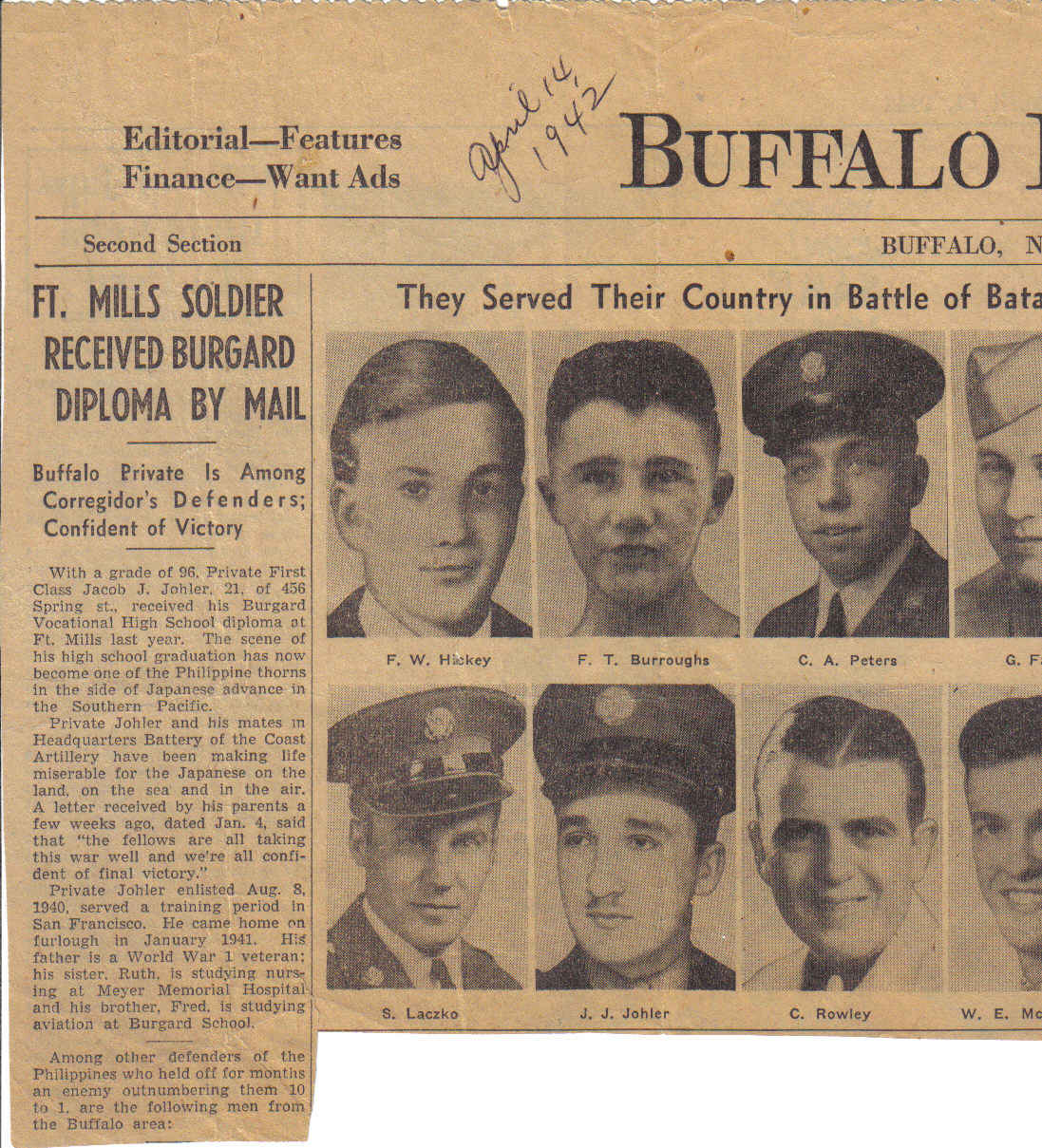
My dear friend, Karen Zale, is the daughter of the late John Zale who was on the Death March and survived captivity. Karen recently participated in the Annual Bataan Memorial March in New Mexico, to remember these courageous men. I will include the narrative in a later post. Karen Zale transcribed her father’s story from a video interview that was done in Buffalo, New York. John Zale was a friend of my father, Jacob J. Johler. Both were interned at Camp Hoten in Mukden, Manchuria.
Joseph “Joe” Fragale was also on the Bataan Death March. “Joe” interned in a prison camp in Japan.
Joe Fragale was the best man at Jacob and Marie Stoiber’s wedding which took place one year after liberation.
An American Ex-POW group was spearheaded by these men and others in Buffalo, New York.
Karen Zale had this to say about the Memorial March:
“As you can imagine, participating in the 25th Annual Bataan Memorial March at the White Sands Missile Range
in New Mexico was an experience I will never forget.
Prior to the march, which was held on Sunday, 3/23/14, there were several events to attend. First, however, were
the very long lines for registration, with over 6,200 participants. While in the various lines (roster, pick up bib
number, activate “chip” to be worn on shoe, t-shirt pick-up, etc.) I mentioned to folks that I was there to march for
my dad. One lady, Melodie, took my photo and put it in her blog, which I forwarded to you. Most of the people I
spoke with did not know anyone who was in the Bataan Death March. After waiting in a long line to “meet and
greet” the ex-POWs who were there, they shut the line down just before my turn, saying the men needed a break
and were all very fatigued. I did, however, get to hug and shake hands with four of the survivors who were at the
finish line on the day of the march.
On the Friday before the March, my brother and I attended the annual dinner of the Guardians of Bataan. The
group is made up of over 100 members who are either descendants of survivors who who have an interest in
furthering the remembrance of the Bataan Death March. The guest speaker was awesome; she is the
Commander of the White Sands Missile Range, Major General Gwen Bingham, and she spoke individually to
each of us and shook our hands. A very humble woman.
On Saturday, Allen and I attended the joint annual meeting of the Descendants of the ADBC and the Guardians
of Bataan. Most, but not all, were descendants.
The day of the march was very cold and we had to be on base before they closed the gates at 5:00 am, asking
that the marchers arrive by 3:30 am to clear security, be directed to parking areas, and then walk some distance
to the staging area. At sunrise the sun peeked over the horizon and the rays hit the American flag that was
blowing in the wind, with a backdrop of the high mountains with first rays of daylight illuminating them. I got
goosebumps when they played reveille and started the roll call for those Bataan survivors who were on the stage.
When their name was called, they responded with “present.” That is when the tears started to flow for me and
those around me. The names were then read of those POWs who passed away in 2013 and Taps was played.
Emotions ran high. I cried like a baby. Then they started the bag pipes who lead the procession out of the
staging area and the march had begun, with canons booming in the distance. The crowd of 6,200 marchers
began the long haul of either 14.5 miles or 26 miles, most of us carrying backpacks. I was on sensory overload.
It was not an easy march, with very strong winds blowing the sand in your face. The bandana to cover my face
was much needed in spots. The sand was deep in places, along with rocks and stones that and made the footing
uneasy most of the time. When I was crossing the finish line after 4 hours and 19 minutes of marching, I held
two little American flags in my hand that I was waving and I was shouting that my dad was a survivor and the
crowd was cheering and clapping. I cried crossing the finish line completely overtaken by emotion. It was such
an honor to be a participant in this event to honor and remember those who were forced to march 72 years ago.
We must Always Remember the Battling Bastards of Bataan.”
–Karen Zale
Thank you Karen for remembering.
Quotations From United States Army Private Jacob J. Johler in March of 1941 from Fort Mills, Corregidor in the Philippines. Please read the post immediately following as it describes the events one year later ending with Easter Sunday 1942. In the Christian tradition, Easter is the day that Jesus Christ arose from the dead after being crucified on Good Friday. In addition, I will locate and attach Jacob’s correspondence talking about the Easter service he attended in 1941.
” Day and night you can hear the drone of dive bombers together with the reports of anti-aircraft practice.”
“Well, soon it will be Easter. I’d give a million to be home for Easter. Write and tell me all about it.”
“We’re working pretty hard out here on the island getting ready for more maneuvers starting March seventeenth. For the last week we have been putting up barbed wire all around our sea coast defences [sic].”
“If you could only see the way the people live, the poverty, the food they eat, then you’d realize how much we have back home.”
“Spring must be rolling around in Buffalo and I can just picture the trees all bursting into bloom.”
Soon, I’ll be back home (I hope) …..
Jacob Johler
If there are any researchers or descendants viewing this, I encourage you to obtain and read the book Corregidor, The End of the Line,” by Eric Morris which was published by Stein and Day.
To be able to truly understand what our spouses, fathers, grandfathers went through, one must have an understanding of the events that took place in the Philippines prior to and after the attack of Pearl Harbor. In addition, it is important to see what was taking place prior to the Fall of Bataan and Corregidor.
In addition, I found it vital to understand the history of both the European and the Pacific theater . This is no small task and this is something that has taken years to do.
When I visit the library, I always search in the” Friends of the Library ” section and seem to find many treasures there that are available for purchase. I found a copy of Morris’s book there. Surprisingly, I did not realize that I had a newer edition of the same publication at home!
Because of financial restrictions I was able to attend only one American Defenders of Bataan and Corregidor Reunion in 2007. Later that Year, I was honored to attend the one and only Mukden Reunion in Kingston, New York. At the convention in Washington DC, I was overjoyed as I met someone who served with my father on Corregidor. In Kingston, New York I met former prisoners of war who had signed my fathers diary. There was a visit to the Roosevelt estate and then to the Purple Heart Museum which was very impressive.
During the formative years of my manuscript (still a work in progress), I have read books about the Holocaust, the internment of Japanese civilians in America and also publications about the detainment of German Prisoners of war in the United States. All are eye openers and must be balanced with beautiful things in between. That is why I believe that God has sent my aviary friends, the flowers, my canine companions and the best for last, my husband, for all his support as I undertake this task. God has gifted me with spiritual eyes to see the beauty in a tiny little flower or a lame duck, a sunrise, a manatee….all sent to encourage and let me know He is right beside me. The prisms in my window that my husband purchased for me…light up the room when I am working on a particularly difficult piece.
My advice to anyone who must search the darkness to find the light , you must take on the project slowly and keep balanced, Today, I will look at beautiful flowers and birds at the Botanical Gardens and perhaps catch a sunset at the beach. I might eat ice cream, take a walk, feed the birds or be nurtured by the anhinga, the woodstork, the cardinal…I do know that God has a gift for me and He never diappoints me.
Before I sign off however, I want to refer back to Eric Morris’ book Corregidor, The End of the Line;
In the days and weeks preceding the Fall of Bataan on April 9, 1942, the Japanese inflicted massive artillery and air assaults. April 3rd was Good Friday, the day in the Christian calendar that Jesus was crucified on the cross. The 41st Division, Sector D, II Corps were stationed in the front lines defending Bataan. This Filipino group had fought well in the first Battle of Bataan. General Homma who had since received major reinforcements as indicated in an earlier post, unleashed an attack that surpassed anything previously endured by the Filipinos and the Americans. As the bombing increased, a forest fire of three miles engulfed the front. By that evening the Japanese were now in the foothills of Bataan and occupied an area 3 miles wide and deep. (Morris pp. 387-388)
Saturday, April 4th was a bright and clear day and the Japanese bombers continued their campaign. The infantry was ready to move forward and take control of the last slopes before Samat. Then, they would advance towards the final peaks, those being southern Bataan. (Morris p. 389)
There was a field hospital on Mount Samat in a grove of trees. It was clearly marked with a Red Cross tent that was Paul Ashton’s operating theatre. Ashton was a Major in the United States Army. Eric Morris lists the following after his name; “Medical officer, 12th Medical Regiment, Philippine Scouts, and later 21st Infantry Division (Philippine Army), Bataan Field Force, and Chief Surgeon, No. 1 Hospital, Bataan Field Force.” (Source: “Cast List” behind the Table of Contents in Corregidor, The End of the Line by Eric Morris.) Japanese dive bombers made direct hits to the hospital. Forty of the two hundred patients were killed and the many others were seriously wounded. In addition, most of the men had malaria. As the physician was operating in the open air jungle, he looked up and saw the Japanese infantry appearing over the ridge line about a mile away.
At least one hundred American soldiers appeared and began to deploy their machine guns. It would turn out that this is what remained of the 31st Infantry. This bought a little time as the Japanese retreated for cover. Sadly, Ashton, the physician was told to pick the worst cases because this group would be unable to hold off the Japanese for very long.
Paul Ashton crammed ten men on stretchers into an ambulance that was meant for four. When he arrived at hospital number one in Cabcaben he reported to the field surgeon. He was given a dozen old buses to evacuate his hospital and a few light tanks.
Upon Ashton’s return, the Americans were barely holding the line. The tanks were a welcome sight and while the staff and the patients were being evacuated, the bombing continued.
Ashton’s group returned just minutes after the Cabcaben hospital suffered its first air raid. It was a “scene of unbelievable carnage and confusion.” (page 391). Those who survived the air raid. were in the process of evacuating the hospital.
(Morris, pp. 390-391).
Meanwhile on Corregidor, General Wainwright was given orders by MacArthur, over 3000 miles away in Australia to mount an attack against the Japanese. Wainwright and staff studied the document and many wondered if MacArthur was out of touch with the reality of the situation. (Morris, page 392).
APRIL 5, 1942, EASTER SUNDAY: The Japanese were a day ahead of schedule. Saturday night was spent reorganizing. At dawn they resumed the air and artillery bombardment which was devastating. Mount Samat was stormed after a devastating fire fight. It was at this time that a second Filipino division was destroyed. (Morris page 392-393).
March 4, 1942 – Two Japanese flying boats bomb Pearl Harbor; ENTERPRISE attacks Marcus Island, just 1000 miles from Japan.
March 7, 1942 – British evacuate Rangoon in Burma; Japanese invade Salamaua and Lae on New Guinea. March 8, 1942 – The Dutch on Java surrender to Japanese.
March 11, 1942 – Gen. MacArthur leaves Corregidor and is flown to Australia. Gen. Jonathan Wainwright becomes the new U.S. commander.
March 18, 1942 – Gen. MacArthur appointed commander of the Southwest Pacific Theater by President Roosevelt.
March 18, 1942 – War Relocation Authority established in the U.S. which eventually will round up 120,000 Japanese-Americans and transport them to barb-wired relocation centers. Despite the internment, over 17,000 Japanese-Americans sign up and fight for the U.S. in World War II in Europe, including the 442nd Regimental Combat Team, the most decorated unit in U.S. history.
March 23, 1942 – Japanese invade the Andaman Islands in the Bay of Bengal.
March 24, 1942 – Admiral Chester Nimitz appointed as Commander in Chief of the U.S. Navy.
Pacific theater . http://www.historyplace.com/unitedstates/pacificwar/timeline.htm
Today is April 2, 2014. As I was working on this blog I came across something I wrote on May 11, 2010.
Witnessing
In 2002, our church was putting a Lenten Devotional. I had just finished reading a book called Give Us This Day by Sidney Stewart.
As uncomfortable as it may be to witness, let this true story inspire us and give us the courage to witness .
I regret that today I am unable to locate the book for proper page numbers and correct citation for the pasage I am using here. It is is packed in one of the many boxes of books, letters and notes that I have been working through for many years. We have moved several times and it is a challenge to keep this all together and organized as we pack and unpack. I would like to thank the author and publisher for permission to share the following. I decided to post today because there was a rainbow across the page from a prism my husband purchased for me. They appear often when I am working on this material to encourage and guide. Additionally, I apologize for any typographical errors.
Sidney Stewart wrote:
While fighting the Japanese before surrender in the Philippines, a group of soldiers in their foxhole heard someone crying. They described their anguish as the “lost weeping of a man who is hurt and alone.” Despite continuous machine gun fire, continuous shellings and explosions, two of the soldiers crawled out of their foxholes to reach the boy.
The boy was seriously wounded and so very young. His mom had given him permission to enlist as he was underage. A soldier named Rass became a powerful witness to this young man.
“I am afraid to die, I am scared of dying and I feel kinda cold.” He wept continuously. “Why kid’, Rass said softly, Don’y know anything about God?” “I don’t know nothin’ about dyin’, the kid said, I’ve never been to church in my life.”
Rass reached over and took his hand, “now kid, listen to me, don’t think about dying, just listen to what I have to tell you,” (Rass did not have a lot of time, as soon the order would be given to move up forward as they were on the front lines.),
“You know kid, God made this earth we live on. He made these trees, He made everything and He made man. God put that part in every man that is good, so a man would know the difference when he was doing the right thing and when he wasn’t. I guess you know just like I do that some men fail that little part of God inside of themselves. Some men, a lot of us, are just ornery enough to destroy it.”
“There was a time, a long time ago, when most of the men on earth didn’t pay much attention to God, and so God had a son of his own. He let him be born, right here on earth, so he could show men the right way. Show them that as long as they believed in him and had faith, they’d find out that life here, this was just sort of preliminary. If we came through the test the right way, we would have a life forever, a good life, with no shells or pain or sorrow, a life when things are like you dream. He promised it kid. He said, ‘if you believe in me and believe in my son, ye shall have life everlasting,’ He said that in the Bible and the Bible is God’s book.”
“You ever walked and seen flowers blooming, and the buds coming out on trees? You didn’t have anything to do with those, did you? But there they are. Something made those possible and something never forgets. Every Spring, there they are. That’s God kid and he won’t forget you either. If you just believe, you’ll go where people are never tired or scared or hurt. It’s that simple, if you believe in God and you believe in his son, why you haven’t got anything to be afraid of. Dying means you’ve just passed the test.”
“The boy never took his eyes from Rass’s face and he had the look of a child. Rass cleared his throat and went on. It’s like winning a medal-like going home. The boy had a smile on his face. He was smiling up at Rass as though Rass had shown him something noone else ever had.”
“I am not afraid no more, he said. ” I am not afraid now.” He closed his eyes. Then his head fell over to the side. Someone yelled;
‘hey you guys, we gotta get movin, we gotta get going,’ “We fixed our guns and waited for the order.”

 | dbmc001 on … |
 | Pat Wang on … |
| dbmc001 on Correspondence one year earlie… |
| dbmc001 on Memorial Day |
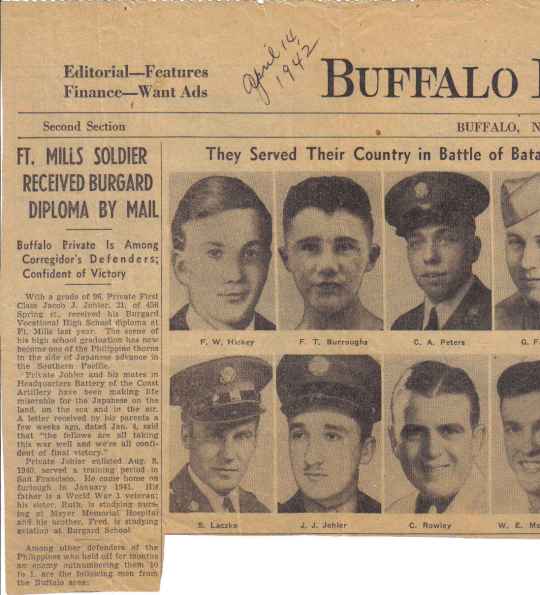

 Johlerpow and Zale et al.
Written
on April 22, 2014